
Learning Spanish

5 stages of learning Spanish before traveling to South America

5 stages of learning Spanish before traveling to South America

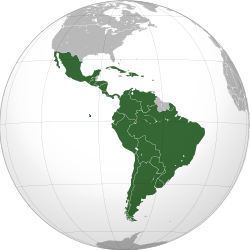
Latin AmericaDo you want to travel to South America? Then, you need to learn the Spanish language. This is the official language spoken in over twenty countries. The Spanish government helps visitors coming into the country to learn the Spanish language. For example, there is an institution called ‘Instituto Cervantes’ located on Eaton Square in London organized by the Spanish government that is involved in promoting and teaching the Spanish language to individuals from all over the world.

The best ways to help you learn Spanish faster and easily are by understanding the first things to learn about the polite words, numbers, and accommodation. Then, label your surroundings, get a local private tutor, get head starts on learning the language, and start making friends before you arrive.

1. The first things to learn

Some basic words you need to learn in the Spanish language are the polite words, numbers, food, and accommodation.

The polite words

You will learn the polite words like

Hello – Hola (Spanish)

Thank you – Gracias

Please – porfavor

Accommodation

Learn words relating to accommodation like

Do you have room for two people? – Tiene una habitación para dos personas? (Spanish)

2. Label your surroundings

You need a good understanding of your surroundings and the addresses for you to enjoy your stay in South America. People may ask you, “De dónde eyes?” which means ‘where are you from?’ or “Quépaísesusted?” what country, are you from?

3. Local private tutor

Look for a local private tutor, if you want to succeed in your quest to learn the Spanish language. Your local or native private teacher will help you understand the basic things you need to learn about the Spanish people, their cultures, and especially, the language.

4. Get a headstart on learning the language

You need to condition your mind on learning the new language if it is different from the languages you learned at school. Register for an intensive language course anywhere it is offered. The Spanish government is organizing an institution in Eaton London called ‘Instituto Cervantes’, responsible for the promotion of the teaching and learning of the Spanish language everywhere in the world. The teachers are native speakers ready to educate you on the rudiments and basics of the language. There is also Elegant International College in London, where you can undergo a 12-week course on the Spanish language. Learning the language will help you when you want to shop, open a bank account, and rent a house. Furthermore, you can buy some language learning applications like duolingo, Roselta stone, or Spanish learning videos like videoEle, hire a private teacher, and buy a language-learning book.

Learn to listen in Spanish

If you want to learn to speak Spanish successfully, you must learn to listen in Spanish. The more you listen to the native speakers as they speak the better you get to understand the language. Listen more if you want to learn better. Therefore, listen for the words you know as the natives and others speak Spanish.

5. Start making friends before you arrive

For you to adapt to a new culture, learn a new language, and acclimatize to the weather conditions of the new place, you need to start making friends with people from such places. They will help and teach you about their cultures, the types of foods they eat, religions, and languages spoken in such a place. You will begin to learn all these things from your friends even before you arrive there. The communication could be through e-mails, Facebook, MeetUp, and other media channels that will help you to chat with these people on a regular basis before you arrive in such a country. You can discuss local sports teams and social clubs.

Author’s Bio

Eldon Mirjah is the creator of Gritty Spanish, www.grittyspanish.com. Gritty Spanish is a course that’s entirely based on informal learning – where students get to grips with the language through urban stories – featuring the eccentric, the bizarre and the real-life. This is a form of learning that is defined by storytelling.

Posted by mikebastin in Learning Spanish, 0 comments
Free Resources for Learning Spanish

Free Resources for Learning Spanish

[vc_row][vc_column][vc_column_text]Learn Spanish for free? As the Director of Marketing for Cabarete Language Institute, I often take Spanish classes at CLI. This is the best way to learn a language; however I do not always have time for a class and I enjoy leaning on my own. Here is a list of 10 free resources I use to compliment my Spanish studies.

1. Duolingo for iPad, Android and Web

• Google Play’s “Best of the Best” 2013.

• “Far and away the best free language-learning app.” —The Wall Street Journal

•It’s free, for real. No fees, no ads, no gimmicks.

•It’s fun. Lose hearts for answering incorrectly, advance by completing bite-sized lessons, and track your progress

•It won’t replace your teacher at CLI, but if you only have ten minutes a day to study it’s better than nothing.

www.duolingo.com

2. Destinos – 1980’s Program from University of Illinois and PBS

An introduction to Spanish told in a telenovela style filmed in multiple Spanish speaking countries.

Good to watch at night when you are too tired to actually study and the 80’s clothes and hairstyles make for a good laugh.

http://learner.org/series/destinos/watch/

3. BBC Spanish Language Portal

More than just news in Spanish, a portal on Spanish language activities. Check out their seemingly impossible crossword puzzles and brain scrambling games.

http://www.bbc.co.uk/languages/spanish/news/

4. 100 Most Common Spanish Verbs

Around week two of Cabarete Langue Institute’s Intensive Spanish course you will be presented with irregular stem changing verbs. This happens in the present tenses with –ar, er, and –ir ending verbs. The vowel can go from e to ie, o to ue, or e to i. (pensar > yo pienso, seguir> yo sigo, etc.). To quote our Spanish text book The Ultimate Spanish Review and Practice: “You cannot predict from the infinitive which verbs will have a stem change and which will not….It is therefore necessary to memorize the verbs that have a stem change.” This is very true. So do yourself a favor and master the 100 Most Common Spanish Verbs and you will be able to say just about anything.

http://www.linguasorb.com/learnspanish/most-common-verbs

5. Conjuverb for Ipad and Iphone

Conjuverb is a verb conjugator for iPad and iPhone that allows you to quickly look up any conjugated Spanish verb and see the English translation. It also will display the full conjugation of any Spanish verb. A fully customizable built in Flash Card module is great for self-testing. You can chose from a group of the most commonly used Spanish verbs or create your own list and you can chose which conjugations to work on. http://conjuverb.com/

6. Verbix.com on Web

A handy website to check verb conjugations:

http://www.verbix.com/

http://www.verbix.com/languages/spanish.shtml

7. Wordreference.com

Master a single word:

http://www.wordreference.com/es/

8. Spanish English Dictionary Freemium for iPad and iPod:

A free Spanish English offline dictionary for your iPad or Iphone. It’s free for the basic edition which is sufficient for most students and includes a phrasebook, verb conjugator and vocabulary quizzes. Unlike a lot of dictionary or verb apps this one works fully offline, which means you do not need to be connected to the Internet to look up a word.

App Store Link

9. Google Translate

Google translate does a decent job translating simple sentences. Forget about putting in an entire document and expecting a well translated document to come out but it can be used as a tool for practicing the art of writing in Spanish.

https://translate.google.com/

10. Dominican Republic Trip

The best free resource for learning Spanish is to come to the Dominican Republic and just walk around and talk to the people. Folks here are very friendly, so come on down for a visit and remember to visit CLI for some person-to-person language instruction.[/vc_column_text][/vc_column][/vc_row]

Posted by mikebastin in Learning Spanish
3 Mistakes Spanish Learners Make and How to Avoid Them

3 Mistakes Spanish Learners Make and How to Avoid Them

The language learning process is full of many a pitfall, and if you are a native English speaker trying to pick up on Spanish, you have undoubtedly encountered your fair share already. Of course, you probably understand the importance of knowing a language like Spanish, one of world’s top three most important languages. And as nations like the U.S. become increasingly globalized and multilingual you know that having one more language under your belt will definitely benefit you both persquonally and business-wise.

Even with firm language goals in mind, it can become frustrating to feel like you are consistently dealing with the same mistakes and problems as you struggle to learn Spanish. It’s all too easy to give up on your language learning objectives when it seems that your progress is hampered by learning barriers. But remember: all students of a foreign tongue struggle with these at some point or another during the process. So before you throw in the towel, check out these 3 common Spanish mistakes and how to avoid them:

  1. To be vs. To have

One of the biggest challenges for Spanish learners is perhaps acquiring the initial skills to navigate around the terms “to be” and “to have”. In English we use “to be” to indicate things like age (“I am 25 years old”) while in Spanish “to have”/ “tener” is utilized instead (“Yo tengo 25 años”). Although this latter phrase translates literally to mean “I have 25 years”, the key is to not think of it in English terms. When you use literal translations from Spanish to English, the struggle to grasp the concepts becomes exponentially harder. Instead, commit to thinking fully in Spanish. Accept that these are language nuances you must learn and refuse to allow your mind to try to ‘logically’ translate and make sense of them in English. Doing so will lead to faster fluency.

  1. Tú vs. Usted

With many different titles for different societal stratums, Spanish is definitely a more formal language than English which constrains itself to the use of a few proper titles. One way in which Spanish exhibits itself as a formal tongue is through the use of “tú” vs. “usted”. If you’ve been studying Spanish for some time, you know that “tú” is the “you” term used for close friends or informal acquaintances while “usted” is reserved for those older or those you don’t know very well. Most Spanish learners start out using primarily “tú”, making it all too easy to forget that “usted” is also a vital part of the language. The key is to learn these two “you” terms side by side, forcing your brain to consider beforehand who you’re speaking to and which one is applicable. This way your mind is trained from the start to think this through and you won’t run the risk of offending anyone with the informal term when you should be using formal.

  1. Embarrassed vs. Embarazado/a

Our brains love to make associations between similar sounding words, causing us to believe that if they sound the same, they must mean the same thing. As a result, false cognates are one of the biggest and most difficult pitfalls to avoid for Spanish language learners. One key example is the use of the word “embarazado/a” to say you’re embarrassed. Yes, the two do sound the same, but unfortunately if you say “Estoy embarazado” you’re merely announcing to the world that you’re pregnant, which will surely be the cause of even more embarrassment than before. However, these situations are avoidable if you take the time to memorize which are the most common cognate errors. Then practice, practice, practice to cement these skills and make sure you don’t stick your foot in your mouth in the future.

Katie Collom writes on behalf of Language Trainers Online, a foreign language tutoring service specializing in group and one-on-one classes via Skype. Check out their language level tests and other free, online resources on their website or send them a quick inquiry for more information about their personalized course packages.

Posted by mikebastin in Learning Spanish